Al pastor and the vertical-spit connection
TL;DR: Al pastor adapts a spit-roasting tradition associated with Lebanese migration to Mexican ingredients and tastes. A home frying-pan recipe is an adaptation of that method, not the same equipment.
Contents
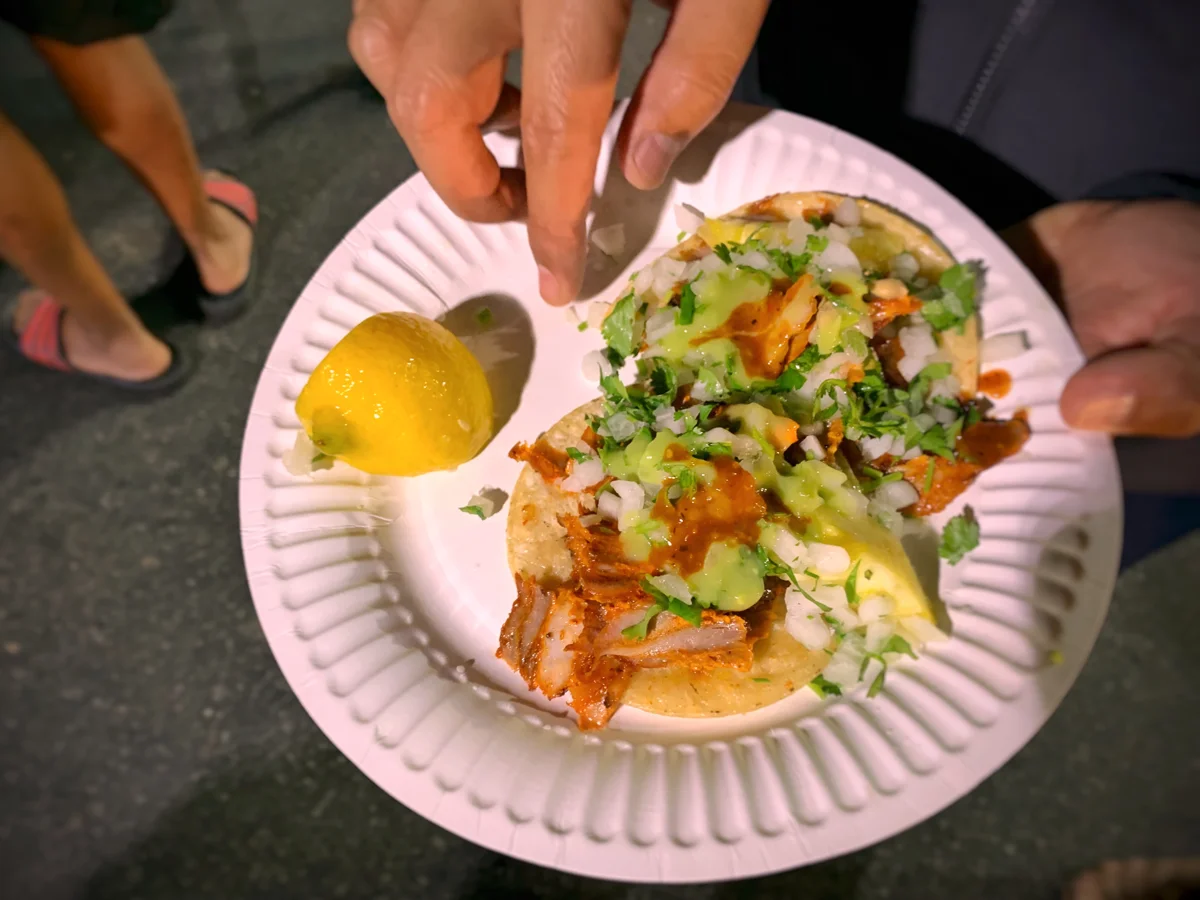
Watch a taquero work a trompo: marinated meat stacked on a vertical spit, its edges browning as the cooked outer layer is shaved away. Tacos al pastor bring a history of migration into that scene. Their cooking method is connected to Lebanese shawarma, while the familiar Mexican preparation uses pork, a chile-based marinade and corn tortillas. The roasting technique traveled; the filling, seasoning and bread changed along the way.
The Immigrants and the Spit
Lebanese immigrants arriving in Mexico in the late nineteenth and early twentieth centuries brought shawarma traditions, including meat cooked on a rotating vertical spit. Puebla is an important part of this history. Tacos árabes, associated with the city, use spit-roasted meat in a pita-like bread called pan árabe. Bread catches the meat’s juices, turning slices from a large roast into a handheld meal. The shared technique is to brown exposed meat and shave it from the outside, while the inner layers remain on the spit to cook in turn.
Mexico Rewrites the Recipe
In al pastor, pork meets a Mexican-style adobo of dried chiles, achiote, garlic and vinegar, with spices varying by cook. Corn tortillas make another change from the bread surrounding shawarma. A food reference hosted by Canada’s National Collaborating Centre for Environmental Health describes thin slices of marinated meat stacked on a vertical rotisserie, with the cooked outside shaved off for serving. The exact first combination remains uncertain. Al pastor means shepherd-style: a name that carries the older roasting tradition into a taco shaped by Mexican ingredients, taquerias and tastes. NCCEH: Mexican food reference, p. 3
- Trompo — a vertical stack, browned and shaved from the outside
- Adobo — chile-and-spice marinades, often including achiote
- Accompaniments — pineapple, onion, cilantro and optional salsa or lime
The Pineapple Trick
Pineapple supplies a sweet, juicy contrast to the seasoned pork. It may be part of the presentation around the spit and is commonly served in pieces with onion and cilantro. The familiar image of a taquero flicking fruit onto a tortilla is part of the spectacle, with fruit cut into small pieces that fit alongside the thin shavings of pork. Some cooks serve it separately, letting diners choose the balance of fruit and meat. Lime and salsa offer further adjustments at the table, letting sourness and heat sit alongside the meat's seasoned, browned edges.
Al pastor meat also appears beyond a small taco: it fills gringas, tortas and other preparations, while some northern Mexican menus use names such as tacos de trompo. Our home recipe uses thin marinated pork seared in batches, with pineapple cooked separately. It can make browned edges in a pan, but it cannot reproduce the changing layers of heat on a vertical spit. Batch cooking gives the slices room to brown. 🌮
Cook at home: Pan-cooked al pastor tacos.
Sources
✍️ Written by the PhantomBite editorial team for the joy of it. Food history is often contested — where the record is murky, we say so rather than pretend to certainty. Recipes are written from general cooking knowledge; preparation times are estimates. The delivery is fictional.