Katsu Sando: Meiji-Era Cutlets, Convenience Stores, and the Case Against Crusts
A crispy pork cutlet between two slices of pillowy crustless bread — the katsu sando is what happens when Japan spends 150 years perfecting a sandwich.
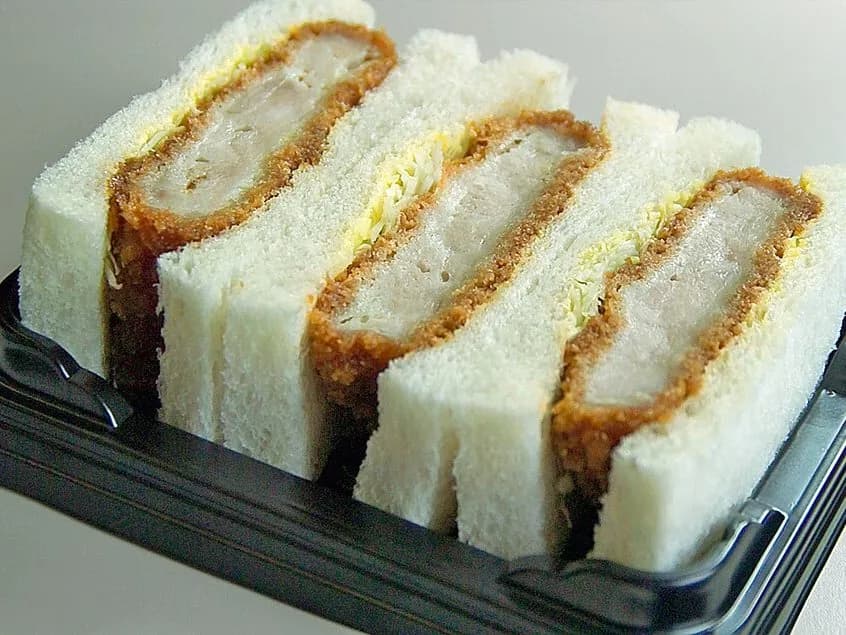
The katsu sando looks almost suspiciously simple: a golden pork cutlet, a swipe of sweet-savory sauce, maybe some shredded cabbage, between two slices of impossibly soft white bread with the crusts removed. But this little rectangle carries 150 years of Japanese food history — a story about how a country adopts foreign food and then quietly out-engineers everyone.
Meiji Japan Meets the Cutlet
When Japan opened to the West during the Meiji era in the late 19th century, Western dishes arrived and were promptly adapted into a new category: yoshoku, Western-style Japanese food, cooked with Japanese ingredients and Japanese instincts. The breaded, deep-fried cutlet — inspired by European dishes like the French côtelette — evolved into tonkatsu: thick pork, coarse airy panko crumbs, deep-fried and pre-sliced for chopsticks, served with a fruity Worcestershire-style sauce and a mountain of shredded cabbage. By the early 20th century it was a beloved dish in its own right, and the story goes that Tokyo tonkatsu shops began slipping cutlets between slices of bread not long after.
Enter Shokupan and the Konbini
The other half of the equation is shokupan, Japan's tall, milky, cloud-soft sandwich bread, whose tender crumb is the perfect foil for a crunchy cutlet. Japanese convenience stores — konbini — turned the pairing into a national institution. From the late 20th century on, chains like 7-Eleven, Lawson, and FamilyMart stocked neatly halved sandwiches in chilled cabinets: egg sando, fruit sando, and the mighty katsu sando, each wrapped like a small gift and restocked with military precision. For travelers, discovering that a convenience store sandwich could be genuinely excellent became a rite of passage; for locals, it was simply Tuesday.
- Tonkatsu: panko-crusted pork, the crunch engine
- Shokupan: soft, slightly sweet, structurally forgiving
- Tonkatsu sauce: the tangy bridge between the two
Why No Crusts?
The crustless cut isn't fussiness — it's design. Removing the crust makes every bite uniform: soft, crisp, sauce, soft, in the same proportion from first corner to last, with no chewy border interrupting the sequence. The habit also traces back to Japanese tea-room and coffee-shop sandwich culture, where clean, precise presentation is part of the flavor. So the katsu sando is served as tidy rectangles with the cut surface facing up, letting you read the pink-white layers like a geological cross-section of a very good decision.
Other sandwiches are assembled. A katsu sando is drafted, reviewed, and approved.
In recent years the katsu sando escaped the konbini shelf and went global — wagyu versions now appear in cocktail bars from London to Brooklyn. Or skip the queue entirely: pretend-order a katsu sando on PhantomBite for $0, watch the ghost rider not arrive with it, and use the site's real 20-minute recipe to fry, sauce, and de-crust one yourself. 🥪
✍️ Written by the PhantomBite editorial team for the joy of it. Food history is often contested — where the record is murky, we say so rather than pretend to certainty. Recipes are tested to work in a home kitchen. The delivery, of course, is not.