Jjajangmyeon and Black Day
TL;DR: Jjajangmyeon pairs wheat noodles with a rich chunjang sauce. On April 14, some singles gather over a bowl for Black Day; it is also an everyday lunch.
Contents
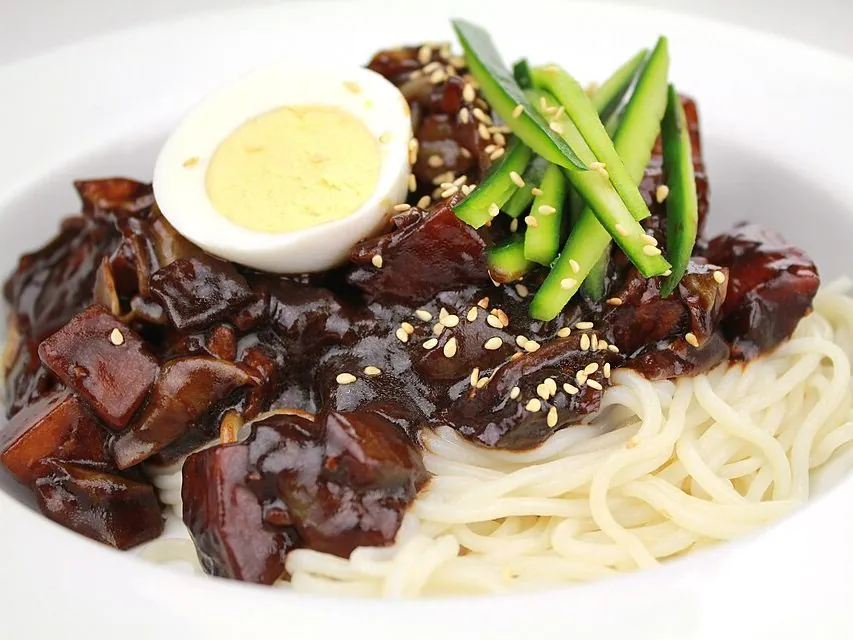
Every kitchen has an answer to 'I'm hungry and I don't want to think.' In Korea, one familiar answer is black and glossy: jjajangmyeon, wheat noodles under a thick sauce of chunjang, pork and vegetables. It is Korean-Chinese food with a history shaped by migration and local tastes. The sauce deserves attention before the delivery-box nostalgia: chunjang is a fermented paste, not simply a pot of ordinary black beans, and its darker, sweeter profile helps distinguish this dish from many Chinese zhajiangmian preparations.
Born in Incheon, Raised by Korea
The dish's roots lead to Chinese migrants, many from Shandong, around the port of Incheon in the late nineteenth century. Their zhajiangmian met a different local audience and evolved. Caramel and adjustments to the paste helped produce the sweeter, darker Korean sauce; pork and vegetables made it a substantial topping for wheat noodles. Gonghwachun, founded in 1905, became an important restaurant in this history. Its former building now houses the Jajangmyeon Museum. The Korea Tourism Organization describes exhibitions on the dish’s changing recipes, Incheon Chinatown and the restaurant itself, bringing the port’s food history into one visit. Korea Tourism Organization: Jajangmyeon Museum
How It Conquered the Delivery Game
Delivery is part of the dish's public image, but the noodle reference gives a more specific account of its spread: inexpensive Korean-style jjajangmyeon became popular with Incheon's merchants and dock workers in the mid-twentieth century, then spread more widely. Its spelling has a separate history. In 2011, the familiar form jjajangmyeon was accepted alongside jajangmyeon as a standard spelling. The two spellings now sit alongside one another, just as restaurant menus offer several versions of the sauce. Delivery adds another familiar detail: noodles and sauce travel to the table and are mixed when the bowl arrives.
Black Day: An Unofficial Occasion for Singles
Valentine's Day on February 14 and White Day on March 14 set up the calendar joke. April 14 is called Black Day, an unofficial occasion when some single people gather over jjajangmyeon. Black clothing and jokes about missed gifts can accompany the meal, and the dark sauce gives the occasion its signature color. The custom adds a playful reason to meet for a meal. The same bowl belongs just as comfortably at an ordinary lunch with no romantic calendar attached.
- February 14: couples, chocolate
- March 14: couples again, candy
- April 14: singles, jjajangmyeon, dark humor, great time
There is more than one way to order the sauce. Gan-jjajang is made without the added water and starch slurry of the usual saucier version; samseon varieties add seafood. Danmuji, the yellow pickled radish, is a familiar accompaniment. The linked home version fries chunjang with pork and vegetables, then uses a measured slurry. Cucumber and egg are optional garnishes, not requirements for every bowl. 🖤
Cook at home: Jjajangmyeon.
Sources
✍️ Written by the PhantomBite editorial team for the joy of it. Food history is often contested — where the record is murky, we say so rather than pretend to certainty. Recipes are written from general cooking knowledge; preparation times are estimates. The delivery is fictional.