The Margherita Myth: Did a Queen Really Invent the World's Favorite Pizza?
The tale of Queen Margherita and pizzaiolo Raffaele Esposito in 1889 is one of food history's best stories — and historians have serious doubts about almost every part of it.
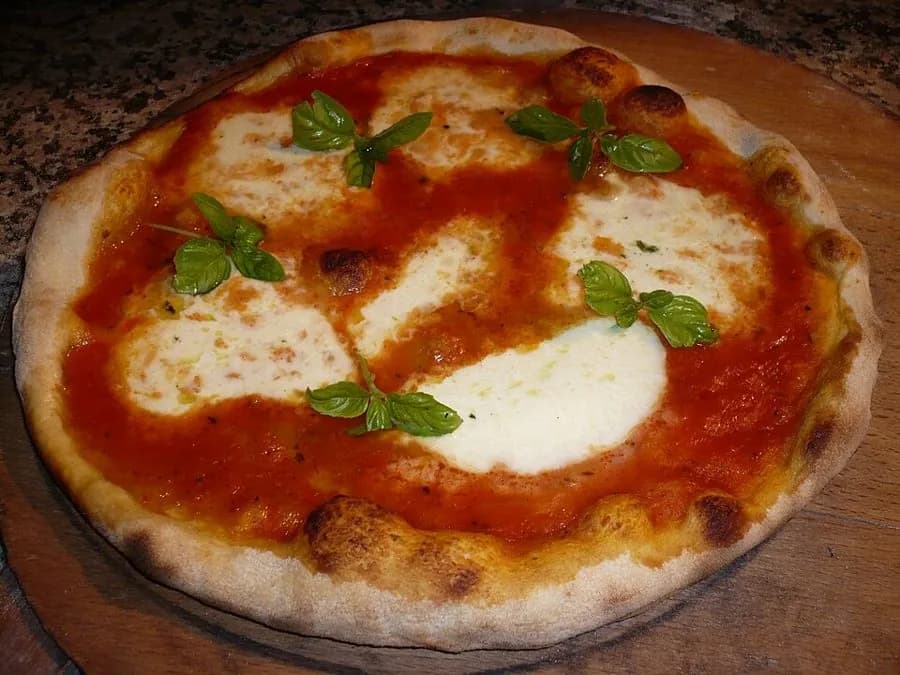
Every legendary dish deserves a legendary origin story, and the Margherita has the best one in the pizza business: a queen, a patriotic chef, and a pizza dressed in the colors of the Italian flag. It is romantic, tidy, and printed on a million menus. It is also, according to most food historians, probably not quite true. Let's enjoy the story and then gently take it apart. 🍕
The Legend of 1889
As the story goes: in June 1889, Queen Margherita of Savoy visited Naples with King Umberto I. Tired of French haute cuisine, she summoned the city's famed pizzaiolo, Raffaele Esposito of Pizzeria Brandi. He prepared three pizzas, and the queen favored the one with tomato, mozzarella, and basil — red, white, and green, the tricolore of newly unified Italy. Flattered, Esposito named it after her. Pizzeria Brandi still displays a thank-you letter from the royal household, dated 1889, as proof.
Where Historians Raise Their Eyebrows
The trouble is in the details. Researchers have noted that the famous letter's authenticity is questionable — the handwriting and seal have been challenged, and its convenient survival at exactly the pizzeria that benefits from it invites suspicion. More importantly, pizzas topped with tomato, cheese, and basil were described in Naples decades before 1889; an 1866 account by Emanuele Rocco lists exactly that combination as a standard option. The most likely truth: Esposito didn't invent the pizza, but the royal visit — real or embellished — gave an existing Neapolitan classic an unbeatable brand name. Notably, the legend itself only became widely told decades later, which is exactly how good marketing origin stories tend to behave.
Great dishes are invented slowly. Great stories are invented afterwards.
What Makes a True Margherita, According to Naples
Whatever its origins, Naples takes the pizza itself extremely seriously. The Associazione Verace Pizza Napoletana (AVPN), founded in 1984, certifies pizzerias worldwide and defines the real thing with near-legal precision. Neapolitan pizza-making culture was even inscribed on UNESCO's intangible cultural heritage list in 2017 — official recognition that the craft of the pizzaiolo, spinning dough and reading a roaring oven by eye, is heritage worth protecting.
- Dough of only flour, water, salt, and yeast — hand-stretched, never rolled
- San Marzano-type tomatoes and mozzarella (fior di latte or bufala)
- Wood-fired oven around 430-480°C, baking in roughly 60-90 seconds
- A soft, foldable crust with charred leopard spots — crunchy is for other pizzas
Queen or no queen, the Margherita earned its throne on flavor alone. You can pretend-order one on PhantomBite right now — $0 at checkout, a ghost rider gliding across the map, and a delivery time best described as 'never.' Luckily the dish page has a real 20-minute recipe, so your kitchen can do what the phantom cannot: actually deliver.
✍️ Written by the PhantomBite editorial team for the joy of it. Food history is often contested — where the record is murky, we say so rather than pretend to certainty. Recipes are tested to work in a home kitchen. The delivery, of course, is not.