Chimaek: How Korea Fried Chicken Twice and Changed It Forever
Double-frying, sticky-sweet yangnyeom sauce, and a beer on the side — Korean fried chicken is a technical achievement, a social ritual, and an economic story all in one crispy package.
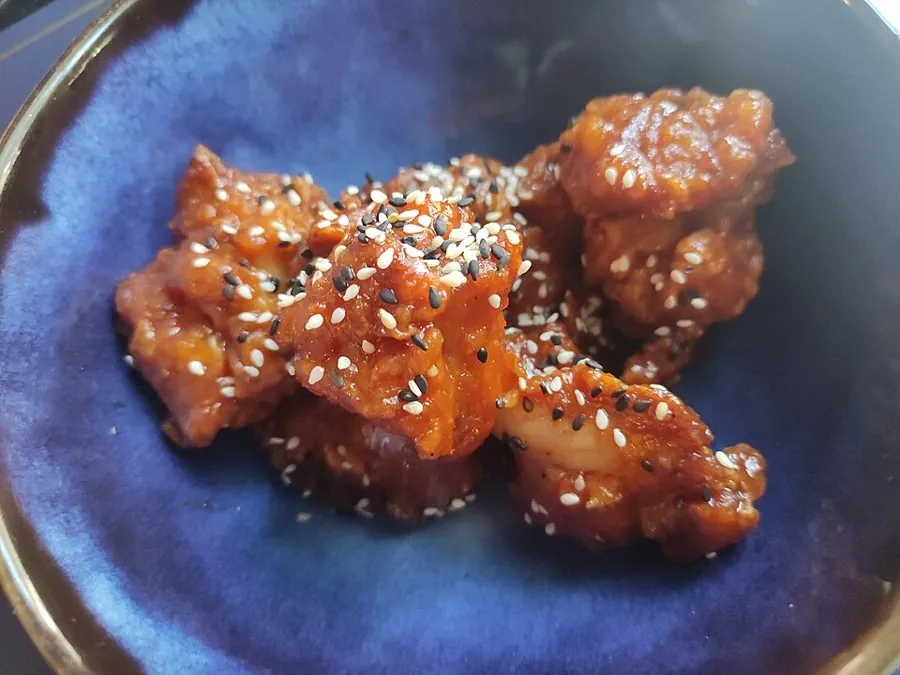
Fried chicken existed long before Korea got involved. But Korea looked at the world's fried chicken, said 'good start,' and proceeded to fry it again. The result — shatteringly crisp skin that stays crunchy under a coat of sticky-sweet-spicy sauce — is now a global obsession. Behind it sits one of the great food-culture stories of the modern era: a technique, a ritual called chimaek, and a very unusual economic backstory.
The Double-Fry: Engineering, Not Luck
The signature of Korean fried chicken is the double fry. The first fry, at a moderate temperature, cooks the meat and starts rendering fat out of the skin. The chicken rests, moisture escapes, and then a second, hotter fry drives out the remaining fat and crisps the thin coating into something closer to glass than bread. That is why yangnyeom chicken can be drenched in gochujang-honey-garlic sauce and still crunch audibly. It is not a happy accident; it is process engineering applied to poultry.
Chimaek: Chicken's Other Half
Chimaek is a compound of 'chicken' and 'maekju,' the Korean word for beer, and it names not a dish but an occasion. Watching a baseball game? Chimaek. Friday night by the Han River? Chimaek. National football match at 3 a.m.? Obviously chimaek. Cold lager cuts through the fried richness, the sauce demands another sip, and the loop sustains itself beautifully. When the K-drama My Love from the Star featured a heroine craving chimaek in 2014, the ritual went regionally viral, pulling Korean fried chicken across Asia and beyond.
Chimaek is not a menu item. It is a state of mind with a delivery radius.
Why Korea Has So Many Chicken Shops
Part of the answer is history. After the 1997 Asian financial crisis, waves of laid-off office workers used severance pay to open small businesses, and fried chicken franchises — relatively cheap to start, always in demand — became a common landing spot. The boom filled Korean streets with chicken shops and filled the market with competition, which kept quality high and innovation constant: soy-garlic, snow cheese, honey butter, half-and-half boxes for the indecisive. It is often said, only half-jokingly, that Korea has more fried chicken outlets than the world has McDonald's — the punchline lands because it feels entirely plausible to anyone who has walked a Korean street at night.
- Fried (huraideu) — the pure, crispy baseline
- Yangnyeom — sweet-spicy gochujang glaze, the icon
- Ganjang — soy-garlic, dangerously easy to overeat
- Banban — half fried, half yangnyeom, the diplomatic option
If your stomach just growled, you can pretend-order yangnyeom chicken on PhantomBite for a very reasonable $0. A ghost rider will accept your order with great solemnity and deliver absolutely nothing, forever. Fortunately, the dish page carries a real 20-minute recipe, so the crunch can be yours tonight — beer sold separately, by reality. 🍗
✍️ Written by the PhantomBite editorial team for the joy of it. Food history is often contested — where the record is murky, we say so rather than pretend to certainty. Recipes are tested to work in a home kitchen. The delivery, of course, is not.