Hotteok: The Molten Sugar Pancake That Keeps Korean Winters Alive
A chewy pancake hiding a lava pool of brown sugar and cinnamon: hotteok is Korea's definitive winter street food, with roots tracing back to 19th-century Chinese merchants.
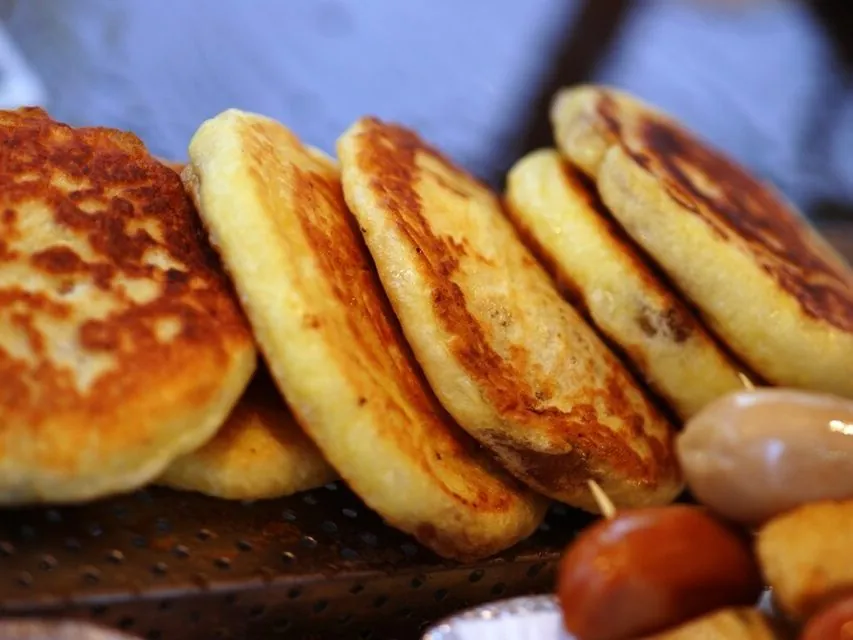
Every Korean winter has a soundtrack: the sizzle of dough hitting an oiled griddle, the clack of a metal press flattening it, and the small gasp of someone who bit in too early and met the molten sugar inside. Hotteok is less a pancake than a delicious hazard, and Koreans have been happily burning their tongues on it for over a century.
Merchants, Ports, and a New Pancake
The story goes that hotteok arrived with Chinese merchants who settled in Korea in the late 19th century, after Korean ports opened to foreign trade. They brought griddle breads and stuffed pancakes from home — but where the Chinese versions often leaned savory, filled with meat or scallions, the Korean market pulled the recipe steadily toward sweetness. The name itself hints at the origin: 'ho' has long been used in Korean for things that came from China, and 'tteok' means rice cake or cake. Over the following decades the recipe naturalized completely: wheat dough, sometimes blended with glutinous rice flour for extra chew, wrapped around a filling of brown sugar, cinnamon, and crushed nuts, then pressed flat on a hot greased griddle until golden and blistered. Inside, the sugar melts into a syrup that pools like a tiny hot spring — beautiful, delicious, and thermodynamically ruthless.
A Winter Ritual
Hotteok is seasonal by nature. Stalls appear as the weather turns cold, usually alongside the other members of Korea's winter street-food cabinet: roasted sweet potatoes, roasted chestnuts, and fish-shaped bungeoppang. A paper cup folded around a fresh hotteok doubles as a hand warmer, which is not a side effect but arguably the core product. It costs pocket change, takes a minute to cook, and delivers roughly the same comfort as a small personal fireplace you are allowed to eat.
- Classic: brown sugar, cinnamon, and peanuts in a chewy wheat dough
- Ssiat hotteok: Busan's famous 'seed hotteok', split open and stuffed with sunflower seeds, pumpkin seeds, and nuts
- Green tea, corn, and vegetable-stuffed variants for the adventurous
Busan's Ssiat Hotteok
In Busan's markets — the BIFF Square stalls near Nampo-dong are the famous ones — vendors took hotteok one step further. The pancake is fried in a generous pool of oil until the outside crisps, then snipped open like a pita and filled with a heaping scoop of sunflower seeds, pumpkin seeds, and chopped nuts. The ssiat (seed) hotteok became a symbol of the city, name-checked in travel shows and eaten one-handed by film-festival crowds, and the line in front of a good stall on a cold evening is a Busan landmark in itself. 🔥
Rule one of hotteok: the first bite is always too soon.
If you can't make it to a Korean street corner this winter, you can pretend-order hotteok on PhantomBite — checkout is $0 and the ghost rider will circle your neighborhood forever without ringing the bell. Luckily, the site's real 20-minute recipe means the molten-sugar situation can happen safely in your own pan.
✍️ Written by the PhantomBite editorial team for the joy of it. Food history is often contested — where the record is murky, we say so rather than pretend to certainty. Recipes are tested to work in a home kitchen. The delivery, of course, is not.