Tteokbokki: How a Royal Court Dish Became Korea's Fiery Street Queen
Tteokbokki started life as a gentle soy-sauce dish for Joseon royalty, then reinvented itself in a 1950s Seoul street market as the gochujang firecracker we know today.
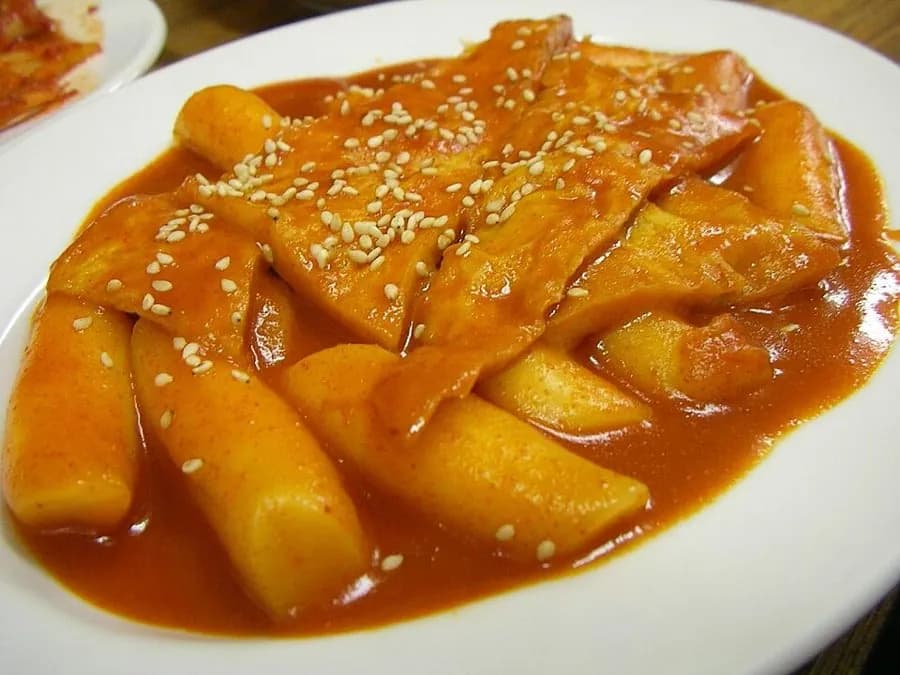
Here is a plot twist worthy of a K-drama: tteokbokki, the lava-red street snack that makes tourists sweat and Koreans nostalgic, was once a polite, soy-sauce-colored dish served to kings. No chili. No fire. Just rice cakes, beef, and vegetables gently stir-fried for the most refined palates in the land. The journey from palace banquet to plastic street stool took a few centuries, one war, and — the story goes — one very resourceful woman with a griddle.
The Royal Original: Gungjung Tteokbokki
The ancestor of today's dish is gungjung tteokbokki, literally 'royal court stir-fried rice cakes.' Old cookbooks from the Joseon era describe rice cakes stir-fried with soy sauce, beef, mushrooms, and vegetables — closer in spirit to japchae than to anything you'd eat at a street cart. It was savory, mild, and glossy, a dish about texture rather than heat. One important detail: chili peppers only reached the Korean peninsula around the 17th century, so for much of tteokbokki's early life, a spicy version was not even possible.
Sindang-dong, 1950s: The Gochujang Big Bang
The spicy revolution is usually credited to Ma Bok-rim, a woman selling food in Seoul's Sindang-dong neighborhood in the years after the Korean War. As the story goes, she accidentally dropped a piece of rice cake into a Chinese black bean sauce dish, liked the idea of saucy rice cakes, and began experimenting — eventually landing on a gochujang-based sauce that clung to every chewy cylinder. Her stall grew into a legendary tteokbokki alley that still exists today, where you can cook the dish at your table like a communal ritual.
Royal food fed a king. Street tteokbokki fed a recovering nation.
Timing mattered as much as taste. Postwar Korea had wheat flour from aid programs, so cheap wheat-based rice cakes appeared alongside traditional rice ones. Tteokbokki became affordable comfort: hot, filling, communal, and priced for students. By the 1970s and 80s it was the after-school snack, sold outside every school gate in the country.
One Dish, Infinite Personalities
- Classic gochujang tteokbokki — sweet, spicy, the default setting of Korean street food
- Gungjung style — the soy-sauce royal original, still served as a 'gentle mode'
- Rose and cream versions — the modern café-generation remix
- Rabokki — tteokbokki plus ramen noodles, because why choose
That flexibility is why tteokbokki never went out of fashion — it absorbed cheese, cream, and jjajang while staying unmistakably itself: chewy, saucy, slightly dangerous to white shirts. Craving it now? You can pretend-order tteokbokki on PhantomBite — checkout is $0, a ghost rider sets off on the map, and the food, in loving tribute to physics, never arrives. While the phantom pedals nowhere, the real 20-minute recipe on the dish page will get actual tteokbokki into an actual bowl. The king never had it this easy. 🌶️
✍️ Written by the PhantomBite editorial team for the joy of it. Food history is often contested — where the record is murky, we say so rather than pretend to certainty. Recipes are tested to work in a home kitchen. The delivery, of course, is not.