The Delivery Fee Wars: How 'Free Delivery' Died and Everyone Noticed
There was a time when delivery in Korea cost exactly zero won extra. Then the fees arrived — itemized, layered, and weather-adjusted — and a nation of delivery lovers became a nation of fee auditors.
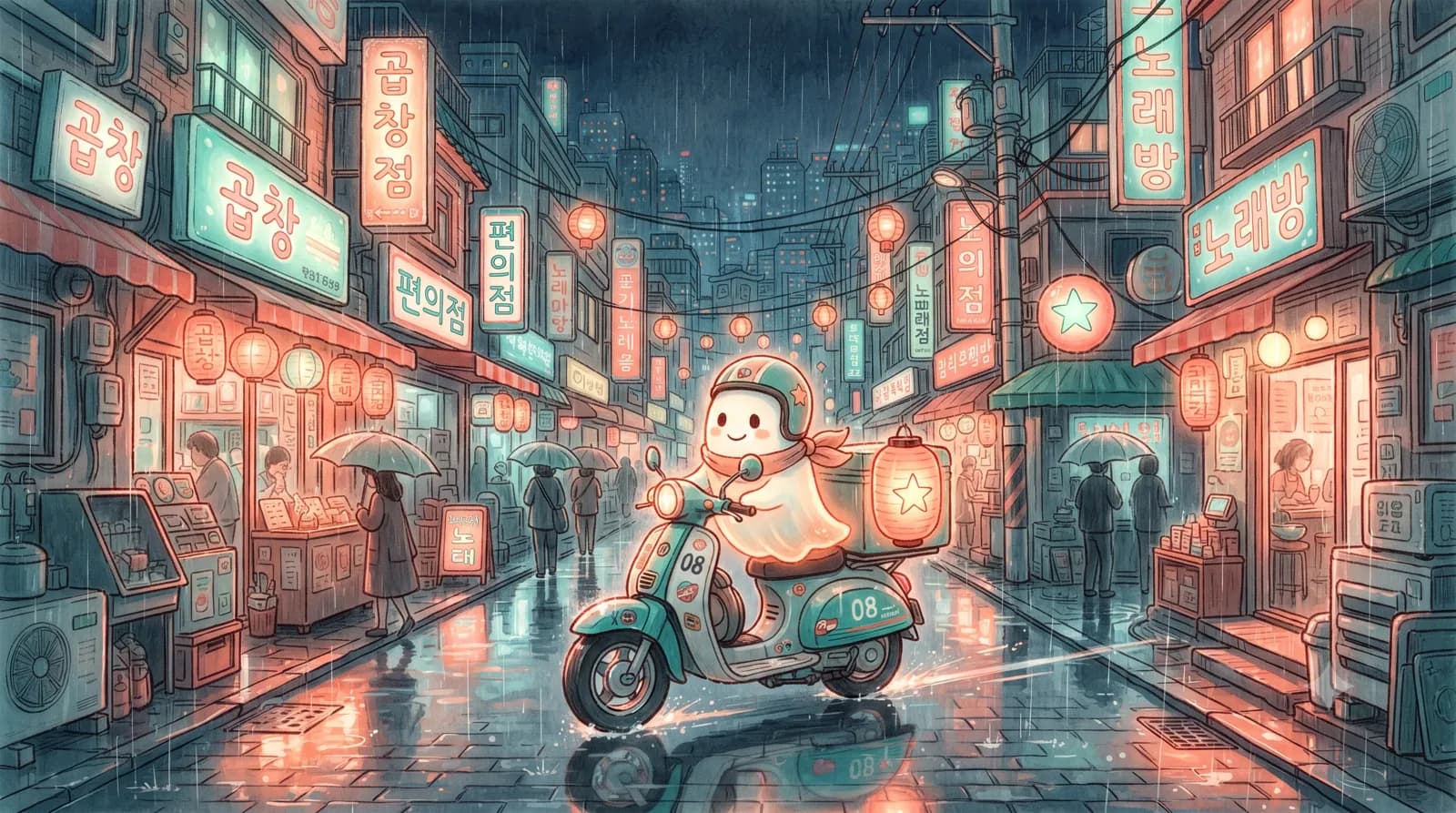
Here is a sentence that sounds like fantasy fiction to anyone who started ordering food after 2018: delivery in Korea used to be free. Not 'free with subscription,' not 'free over a minimum,' just free — the price of the jjajangmyeon was the price of the jjajangmyeon, and a rider bringing it to your door was simply how restaurants did business. The fee line item didn't exist because the concept didn't exist. Then, over the span of a few years, it did.
Where the fees came from
In the tin-box era, delivery riders were usually restaurant employees. The cost of delivery was baked into the food price and absorbed as a cost of doing business, the same way a restaurant absorbs the cost of washing dishes. What changed was structural: as delivery volume exploded, restaurants increasingly outsourced riders to third-party agencies, and platforms began coordinating dispatch. Each layer in that chain — restaurant, agency, platform, rider — needed its slice. The hidden cost became a visible cost, and the visible cost landed on the receipt as a new line: baedalbi, the delivery fee.
Once the fee existed, it started behaving like a market price. It rose during rain and snow, when fewer riders wanted to work. It rose late at night. It varied by distance, by neighborhood, by how busy the dinner rush was. Some of that is genuinely fair — riding a motorcycle through freezing rain deserves compensation. But for consumers who remembered zero, every increment felt like a small betrayal.
The receipt became a battlefield
Consumer backlash followed a predictable but fascinating arc. People began comparing fees across apps for the same restaurant. Online communities compiled which places charged what, and 'fee shaming' of especially creative surcharges became a minor genre. Some customers rediscovered pickup, walking fifteen minutes to save a few thousand won as a point of principle. Platforms responded with subscription programs and fee-capped promotions, effectively re-hiding the cost they had just spent years making visible. The fee wars settled into an uneasy equilibrium: everyone knows delivery costs something, and nobody fully agrees on who should pay it.
- The fee was always there — it just used to hide inside the menu price
- Splitting delivery into layers (restaurant, agency, platform) made the cost explicit
- Visible fees created comparison shopping, and comparison shopping created backlash
Nothing radicalizes a customer faster than paying for something that used to be free.
The honest truth about 'free'
The uncomfortable economics lesson underneath the fee wars is that free delivery was never free. Someone always paid — the restaurant through thinner margins, the rider through bundled low wages, or the customer through quietly inflated menu prices. Itemization didn't create the cost; it just assigned it a name and a number, and humans hate numbers attached to things they used to get 'free.' Behavioral economists call this loss framing: the pain of a visible 3,000-won fee outweighs the invisible 3,000 won that was always hiding in your fried chicken. Which brings us to PhantomBite, the only delivery app to solve the fee problem with flawless logic: our delivery fee is zero because our delivery is zero. No food, no rider costs, no rain surcharge, no minimum order. You tap, a ghost rider departs, nothing arrives, and your wallet remains untouched. Meanwhile, the 20-minute recipe on your order page costs roughly the price of groceries — which, coincidentally, is what the old 'free delivery' always was.
✍️ Written by the PhantomBite editorial team for the joy of it. Food history is often contested — where the record is murky, we say so rather than pretend to certainty. Recipes are tested to work in a home kitchen. The delivery, of course, is not.