Bubble tea: Taiwanese origins and the role of tapioca
TL;DR: Bubble tea emerged in Taiwan, with competing accounts of its invention. Tapioca pearls supply the chewy texture; brown-sugar milk is a related variation that may contain no tea.
Contents
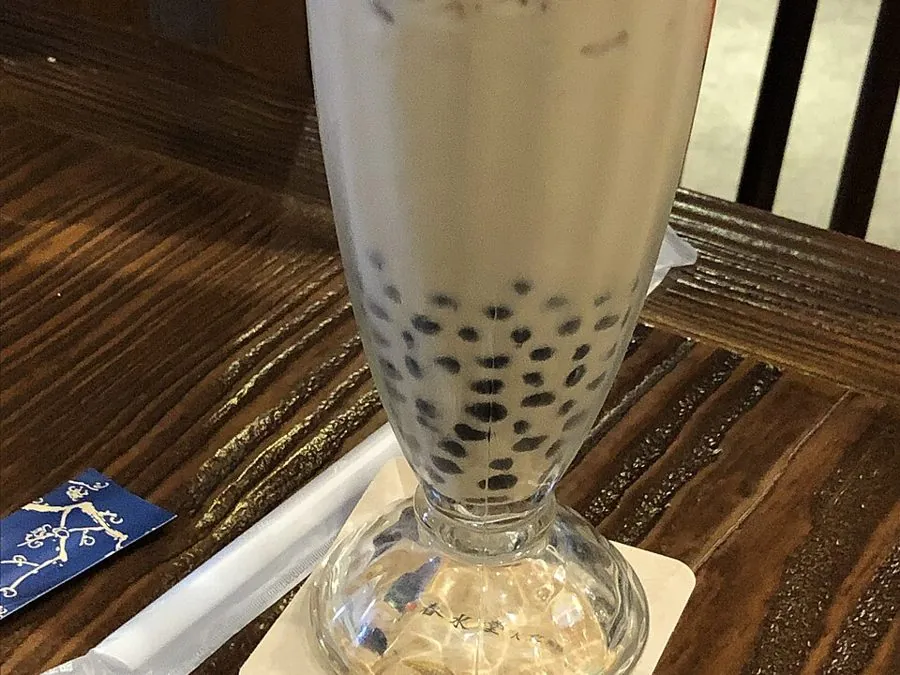
Few inventions have a better power-to-simplicity ratio than bubble tea: cold sweetened tea, milk, and chewy tapioca pearls fat enough to require their own special straw. It is a drink and a snack and a small game of marbles, all in one cup.
1980s Taiwan: Two Origin Stories
Taiwan in the 1980s supplies two competing pearl-drop stories. Chun Shui Tang in Taichung credits employee Lin Hsiu-hui with mixing tapioca into cold tea; Hanlin Tea Room in Tainan credits founder Tu Tsung-ho and white pearls he found at a market. Dates vary between retellings, and invention credit remains disputed. The Fowler Museum at UCLA places Taiwanese bubble tea in the 1980s and describes shaking tea to create bubbles. Shaken tea and chewy pearls offer two kinds of texture in the same cup, turning the tea shop into a place to sip and chew. Fowler Museum at UCLA, p. 52
Why Pearls Work
Tapioca is starch extracted from cassava. Made into pearls and cooked, it gives the cup its springy chew, often described in Taiwanese food language as QQ. Sugar and other ingredients affect pearl color and flavor; brown-sugar syrup makes a particularly glossy partner for milk. The pleasure here is textural: liquid passes through the wide straw together with something to chew. The pearls settle at the bottom, so stirring brings their syrup into the milk and tea. Pearl size and processing differ, so the package's cooking directions matter more than a universal timer.
- Classic pearl milk tea: black tea, milk, syrup-simmered pearls
- Fruit teas: green tea bases with mango, passionfruit, or lychee
- Brown sugar fresh milk: no tea at all, just milk, pearls, and lava-dark syrup
The Global Wave and the Tiger Stripes
Bubble tea spread beyond Taiwan, reaching the United States in the 1990s and becoming part of the food culture of Asian diaspora communities. Its menu is broader than one milky brown cup: black, green and oolong tea bases sit alongside fruit drinks, jellies, pudding and other toppings. Brown-sugar fresh milk takes another turn, leaving out tea altogether. Syrup streaked inside the cup makes those familiar tiger stripes, but the appearance does not tell you whether tea is present. Ask about the base as well as the pearls. 🧋
The home recipe linked below is explicitly a tea-free brown-sugar milk variation using quick-cooking pearls. For a tea flavor, choose a milk-tea recipe with a brewed base. Grass jelly, aloe and popping boba are other toppings found in the broader drink family; choosing them changes the texture as much as changing the tea changes the flavor.
Cook at home: Brown-sugar bubble milk.
Sources
✍️ Written by the PhantomBite editorial team for the joy of it. Food history is often contested — where the record is murky, we say so rather than pretend to certainty. Recipes are written from general cooking knowledge; preparation times are estimates. The delivery is fictional.