The Anatomy of Bibimbap: A Beautiful Order You're Supposed to Destroy
Bibimbap arrives as edible architecture — and then you're handed a spoon and told to wreck it. Inside Korea's most philosophical bowl, from Jeonju pride to sizzling dolsot physics.
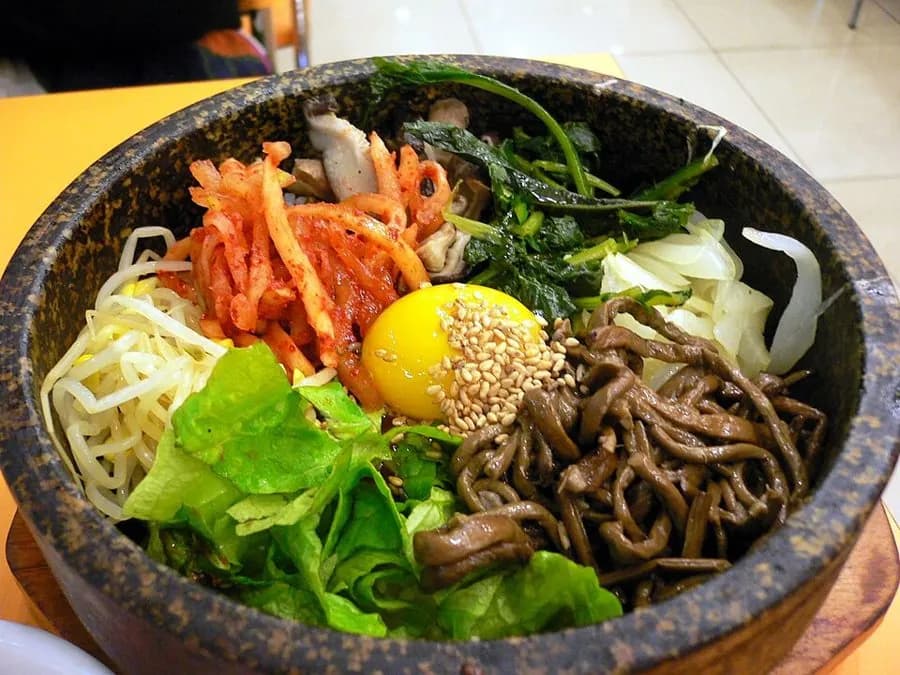
Bibimbap may be the only dish on Earth designed to be admired for ten seconds and then thoroughly demolished. It arrives as a mandala: rice below, vegetables arranged by color like a wheel, an egg enthroned in the center, gochujang standing by. Then Korean dining protocol kicks in — you take your spoon and mix it into glorious chaos. The name says it plainly: bibim means 'mixed,' bap means 'rice.' The destruction is the recipe.
Where the Mixed Rice Comes From
Koreans have been mixing rice with side dishes for centuries, and several origin threads are told: leftover dishes mixed together on the eve of the lunar new year, farmers combining rice and vegetables in one bowl for efficient field lunches, and communal bowls shared after ancestral rites. A dish resembling bibimbap appears in late-Joseon documents under the name goldongban, roughly 'rice mixed with many things.' As with most beloved foods, all the stories are probably a little bit true.
Jeonju: The Capital of the Bowl
If bibimbap has a spiritual home, it is Jeonju, a city in Korea's southwest famous enough for its food that UNESCO designated it a Creative City of Gastronomy. Jeonju bibimbap is the luxury edition: rice sometimes cooked in beef broth, bean sprouts grown locally, hwangpomuk (yellow mung bean jelly), seasoned raw beef yukhoe on top, and a devotion to balance that borders on ceremonial. Locals will tell you the vegetables should number enough to represent genuine abundance — this is a bowl with standards.
Bibimbap is the rare dish where the eater is the final chef.
Dolsot Physics and the Ritual of Mixing
Then there is dolsot bibimbap, served in a stone bowl heated until it hisses. The stone keeps the meal volcanically hot to the last bite and performs the dish's greatest trick: nurungji, the golden crust of rice that toasts against the hot stone while you eat. Mixing itself is the ritual. You fold rather than stir, coating every grain with gochujang and sesame oil, redistributing the mountain into a unified whole. Some see Korean food philosophy in this — harmony of five colors and flavors becoming one — and some just see lunch. Both are correct.
- Namul — seasoned vegetables, each cooked separately with its own character
- Gochujang — the red conductor of the orchestra
- Egg — raw yolk for silk, fried for structure
- Sesame oil — the fragrance that announces the mixing has begun
Want to practice creative destruction? Pretend-order a bibimbap on PhantomBite — checkout totals $0, a ghost rider departs at once, and the bowl arrives never, its beautiful arrangement eternally preserved. For a bowl you can actually destroy, the dish page carries a real 20-minute recipe. Build the mandala, admire it briefly, then do your duty. 🍚
✍️ Written by the PhantomBite editorial team for the joy of it. Food history is often contested — where the record is murky, we say so rather than pretend to certainty. Recipes are tested to work in a home kitchen. The delivery, of course, is not.