Riders Are Infrastructure: The Unwritten Rules of Korea's Delivery Streets
In Korea, delivery riders function less like couriers and more like a city utility — always on, weather-proof, and governed by an etiquette most customers learn the hard way.
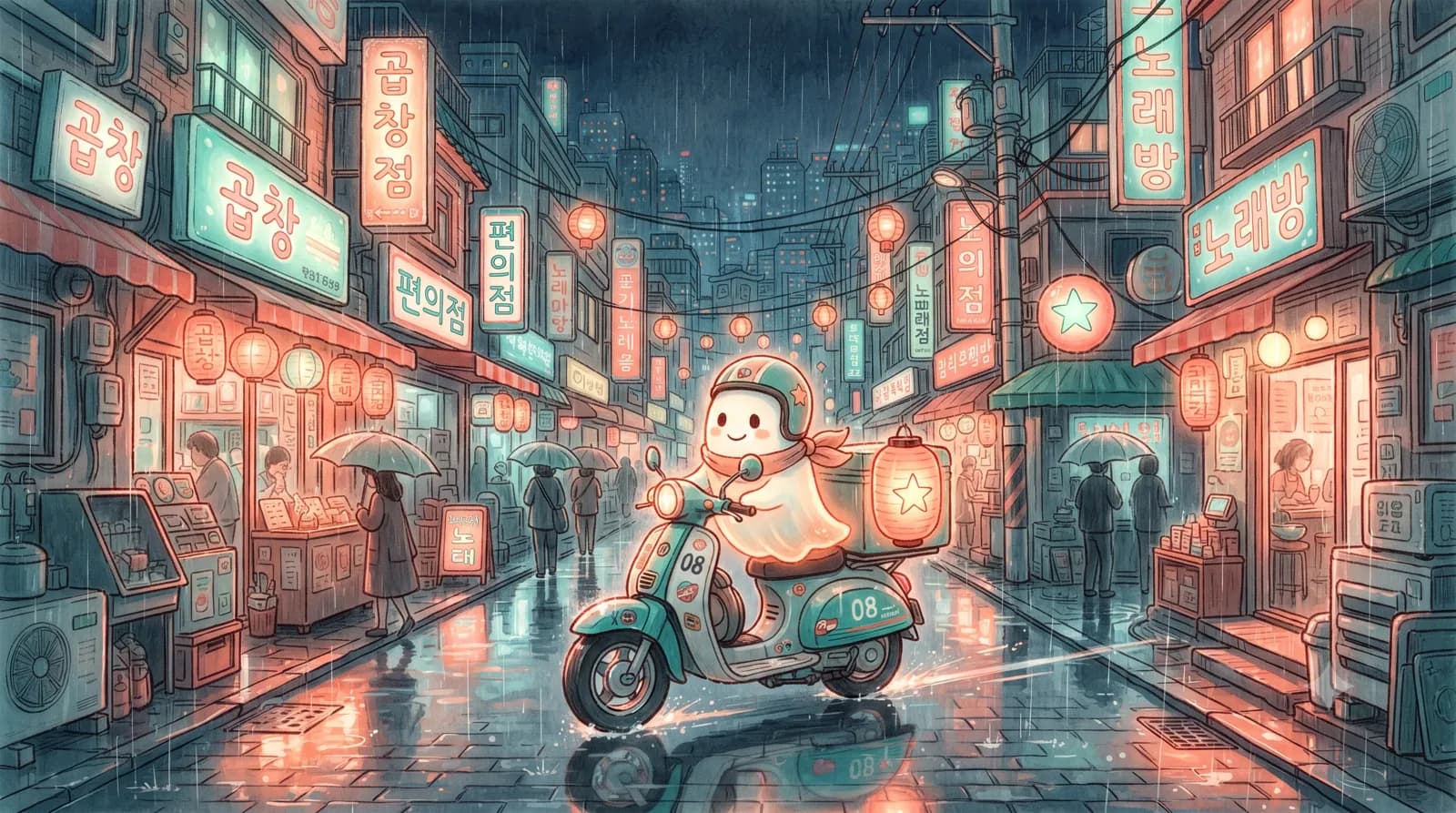
Stand at any busy Seoul intersection around 7 p.m. and count the delivery motorcycles that pass in one light cycle. You'll lose count. Riders threading through traffic with thermal boxes strapped to their backs are as much a part of the urban landscape as bus lanes and convenience stores. Somewhere along the way, Korea stopped treating delivery riders as an extension of restaurants and started depending on them the way a city depends on plumbing: invisible when working, catastrophic when absent.
Speed as a love language
Korean delivery speed is famous, occasionally infamous. The cultural root is 'ppalli-ppalli' — the national reflex toward doing everything quickly — but the practical engine is economics: most riders are paid per delivery, not per hour, so every saved minute is income. This creates the virtuoso riding style visitors gawk at: alley shortcuts memorized like sheet music, apartment complex layouts internalized down to which entrance has the working elevator. It also creates real danger, which is why the industry conversation has slowly shifted from celebrating speed toward protecting the people producing it. A rider who takes three extra minutes is not failing you; they are surviving traffic.
Rain-day respect
There is an unspoken seasonal etiquette in Korean delivery culture, and it peaks when the weather turns hostile. On days of heavy rain, snow, or heat waves, experienced customers adjust their expectations without being asked: they order earlier, tolerate delays gracefully, and often add a note telling the rider to stay safe and not to rush. Some skip delivery entirely on the worst days — a small act of solidarity known in online communities as letting the riders live. When someone rides through a monsoon so your tteokbokki arrives warm, the least civilization can offer is patience and a five-star rating.
- Don't call a rider mid-route to ask where they are — the app already tells you
- Write delivery instructions clearly: building entrance codes save more time than any shortcut
- On terrible-weather days, order early, wait kindly, and consider whether you need delivery at all
The etiquette of the chat window
Delivery apps opened a small text channel between customer and rider, and Koreans promptly developed a micro-etiquette for it. The golden rules: be brief, be specific, be kind. 'Please leave it at the door, code is 1234' is perfect communication. Paragraph-length instructions are not. The request note evolved its own literary genre too — from the practical ('no doorbell, sleeping baby') to the heartwarming ('road is icy, please walk it, no rush'). Riders consistently say the notes that matter most are the ones that treat them like a person doing a hard job, because that is precisely what they are.
A city discovers what its infrastructure is worth on the first snowy Friday night of winter.
None of this is romanticism. Rider work is demanding, weather-exposed, and physically risky, and the platforms coordinating it are still figuring out fair compensation, insurance, and safety standards. Respecting riders isn't a cute cultural quirk — it's the minimum maintenance fee on a system everyone relies on. At PhantomBite, we honor rider culture in the most radical way imaginable: our ghost riders carry nothing, brave no weather, and run no red lights, because they do not exist. Every order you place with us gives one real-world rider a metaphysical night off. And while your phantom courier glides serenely across the tracking map, our 20-minute recipe puts dinner on your table — no helmet required.
✍️ Written by the PhantomBite editorial team for the joy of it. Food history is often contested — where the record is murky, we say so rather than pretend to certainty. Recipes are tested to work in a home kitchen. The delivery, of course, is not.