The Minimum Order Trap: Why You Always Spend More Than You Meant To
You wanted one bowl of noodles. The minimum order said otherwise. Here's the psychology of why that threshold reliably turns a small craving into a full feast.
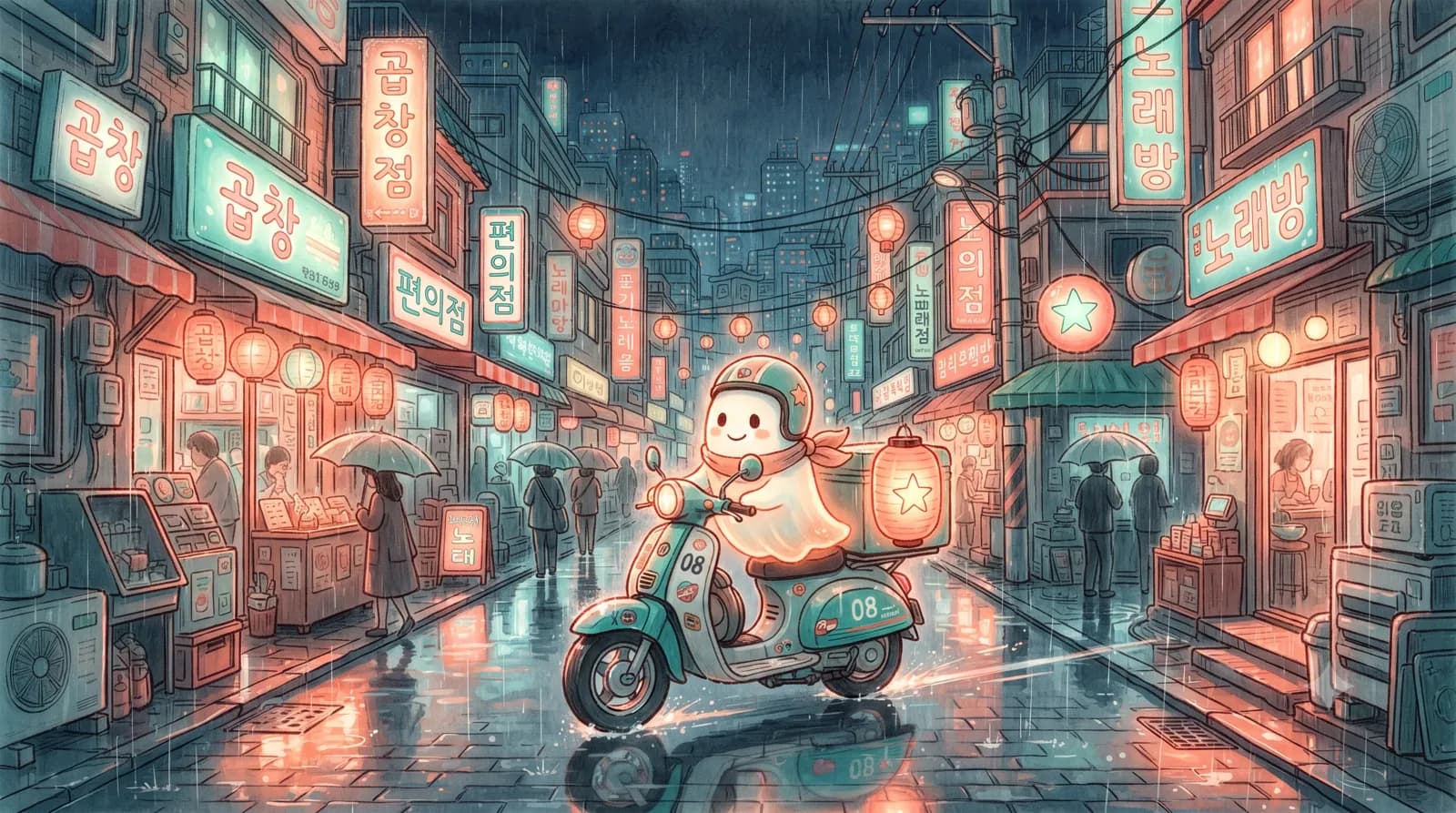
It's 9 p.m. You want exactly one thing: a bowl of noodles, roughly 9,000 won of desire. You open the app, find the restaurant, add the noodles — and there it is, the polite little notice: minimum order 15,000 won. What happens next is one of the most reliable rituals in modern eating. You do not close the app. You begin to browse the sides. Twenty minutes later, a feast for 23,000 won is on its way, and you're not entirely sure how.
Why minimums exist at all
First, the honest defense: minimum order amounts aren't a scam. Delivery has fixed costs — a rider's trip costs roughly the same whether the bag contains one bowl or four. For a small restaurant, sending a rider across town for a single low-margin item can genuinely lose money. The minimum is the restaurant saying 'this trip needs to be worth making.' Fair enough. The interesting part isn't why the threshold exists. It's what the threshold does to your brain once you see it.
The anchor and the gap
The moment you see 'minimum 15,000,' that number stops being a restaurant's logistics constraint and becomes your anchor — the reference point everything else is judged against. Behavioral economists have documented anchoring for decades: an arbitrary number, once displayed, drags nearby decisions toward it. Your 9,000-won craving now reads as a 6,000-won 'gap,' and gaps demand to be filled. Notice the reframing: you're no longer deciding whether to buy more food. You're solving a small arithmetic puzzle, and puzzle-solving feels productive rather than indulgent. The app's suggested add-ons — conveniently priced near typical gap sizes — are less a menu than an answer key.
- Anchoring: the minimum becomes the 'normal' spend, making your original plan feel too small
- Loss framing: paying a delivery fee on a tiny order feels wasteful, so padding the basket feels like savings
- Effort justification: once you've browsed for ten minutes, abandoning the cart feels like losing an investment
The extra-side ritual
This is how the gap-fillers earned permanent places in our hearts. The cheese balls, the fried dumplings, the extra rice, the suspiciously reasonable 4,000-won soft drink combo — an entire tier of menu engineering exists to bridge the space between what you wanted and what the threshold requires. Korean delivery users know this ritual intimately: the phrase 'I only added it to hit the minimum' is a national confession. And here's the psychological kicker — the padding rarely feels like defeat. It feels like optimization. You beat the system by turning a forced spend into dessert. The system, of course, is delighted you feel that way.
Nobody has ever met the minimum order exactly. You clear it by 3,800 won, every single time.
None of this makes you weak-willed; it makes you human, operating exactly as anchoring and loss aversion predict. The defenses are boring but effective: decide your budget before opening the app, check whether pickup erases the minimum, and ask the sacred question — would I want these cheese balls if the threshold didn't exist? If yes, godspeed. If no, close the app and boil some noodles. Or take the nuclear option: PhantomBite, the only delivery app with a minimum order of zero, because multiplying anything by nothing arriving equals freedom. Order one ghost noodle or fifty — the price is identical, the delivery equally punctual in its perfect nonexistence. And the 20-minute recipe that comes with your order scales to exactly one bowl. The precise amount you wanted all along.
✍️ Written by the PhantomBite editorial team for the joy of it. Food history is often contested — where the record is murky, we say so rather than pretend to certainty. Recipes are tested to work in a home kitchen. The delivery, of course, is not.