From Tin Boxes to Tap-to-Order: How Korea Became the Delivery Nation
Long before delivery apps, Korea had riders weaving through traffic with jjajangmyeon in silver tin boxes. The apps didn't invent Korean delivery culture — they just gave it a login screen.
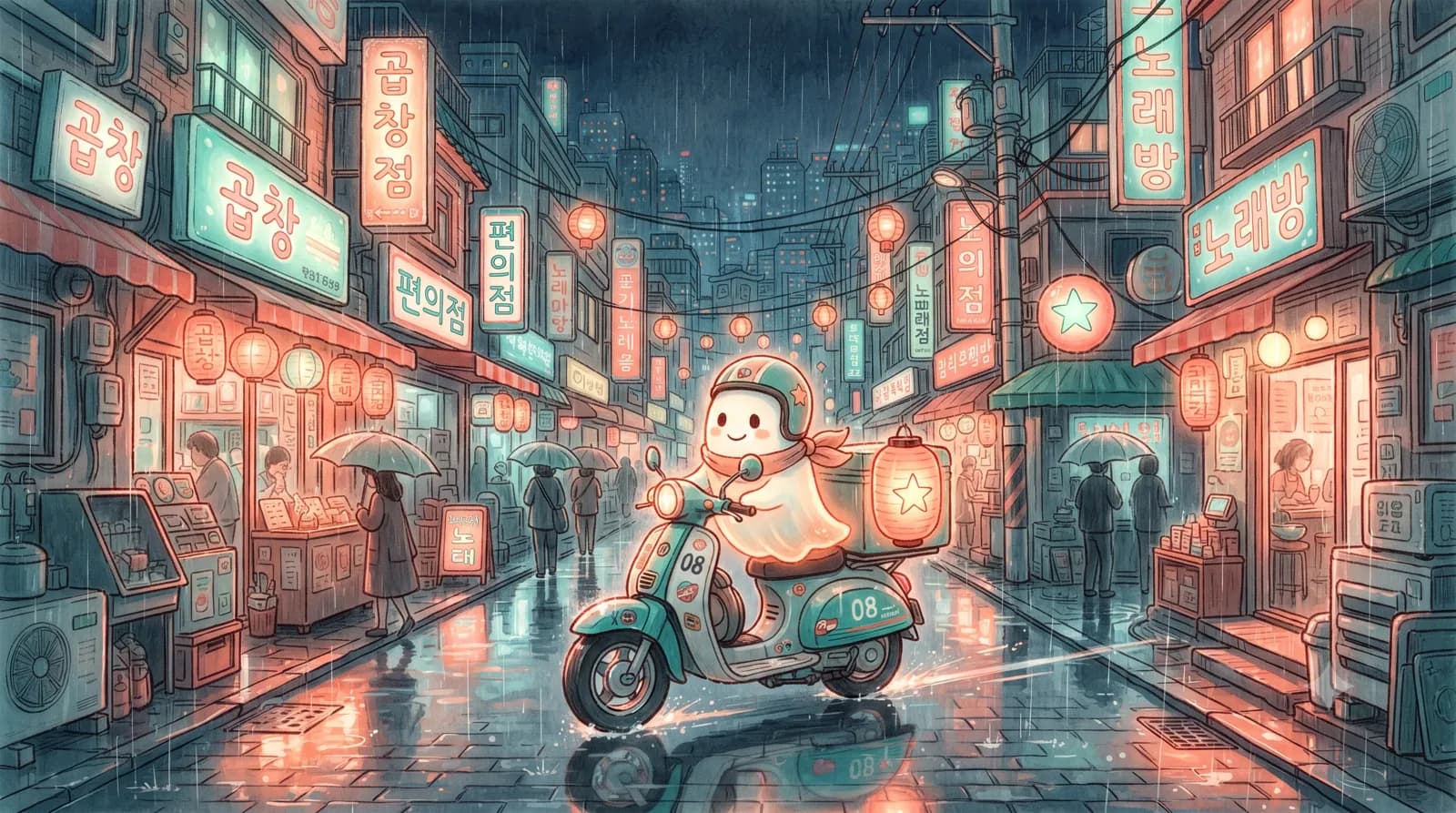
Ask anyone who grew up in Korea about their earliest delivery memory, and there's a good chance it involves a motorcycle, a silver tin box, and a bowl of jjajangmyeon arriving still hot, noodles unsoggy, in an actual ceramic bowl that someone would come back to collect later. That silver box — the cheolgabang — is the founding artifact of Korean delivery culture. Before there were apps, algorithms, or estimated arrival times, there was a person on a bike who knew your neighborhood better than any GPS.
The jjajangmyeon era
Chinese-Korean restaurants pioneered mass food delivery in Korea decades before smartphones existed. The system was beautifully simple: you called the restaurant, recited your address from memory, and a rider showed up with your noodles in a tin carrier designed to keep everything level at speed. The genuinely charming part was the return trip — you'd leave your empty bowls outside your door, and the rider would swing by later to collect them. It was a delivery loop with a built-in social contract: the restaurant trusted you with real dishes, and you trusted them to come back. Fried chicken shops and pizza places joined the game through the 1980s and 90s, each with laminated menus that accumulated in apartment drawers like sediment.
Why Korea, specifically?
Delivery culture flourishes where three conditions overlap: density, speed expectations, and late-night life. Korea has all three in abundance. Most of the urban population lives in high-rise apartment complexes, which turns one rider trip into a dozen potential deliveries within a single building cluster. The famous 'ppalli-ppalli' (hurry-hurry) culture set expectations that food should arrive fast, not eventually. And a thriving late-night economy — study rooms, offices, gaming, after-work gatherings — meant demand didn't stop when restaurants would normally close. Delivery wasn't a luxury add-on; it was infrastructure.
- High-density apartment living made routes efficient and profitable
- A phone-call ordering culture existed for decades before apps digitized it
- Late-night demand created a 24-hour delivery economy long before the rest of the world caught on
Then the apps arrived
In the early 2010s, apps like Baedal Minjok (Baemin) and Yogiyo did something clever: they digitized the drawer full of laminated menus. Suddenly every restaurant in your neighborhood lived in one searchable list with photos, reviews, and a payment button. The apps didn't create demand — Koreans had been ordering delivery by phone for generations — but they lowered the friction so dramatically that ordering became a reflex. Categories exploded beyond jjajangmyeon and chicken into cafes, desserts, convenience items, and eventually almost anything edible. The pandemic years then pushed delivery from habit into something closer to a household utility.
The tin box became a thermal bag, the phone call became a tap, but the promise stayed the same: stay home, food comes to you.
What got lost along the way is a fair question. The bowl-return ritual is mostly gone, replaced by mountains of single-use containers. The rider who knew your building's shortcut is now a dot on a map, dispatched by algorithm. Delivery got faster, wider, and more convenient — and a little less personal. At PhantomBite, we studied this entire glorious history and drew a bold conclusion: the only remaining inefficiency in food delivery is the food. Our riders carry nothing, deliver nothing, and charge nothing — the purest evolution of the tin box yet. While your ghost order travels nowhere, our 20-minute recipes will get actual jjajangmyeon-adjacent joy onto your table faster than the 1990s ever could.
✍️ Written by the PhantomBite editorial team for the joy of it. Food history is often contested — where the record is murky, we say so rather than pretend to certainty. Recipes are tested to work in a home kitchen. The delivery, of course, is not.